
The Small Business Valuation Book (Adams Expert Advice for Small Business)
ISBN: 1580620051
Author: Lawrence W. Tuller
Publisher:
Rating: 2.56
Read NowDownload Book
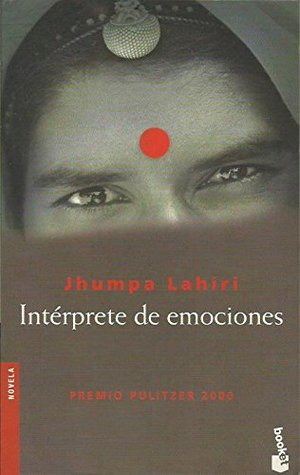
This stunning debut collection unerringly charts the emotional journeys of characters seeking love beyond the barriers of nations and generations.
Mr. Kapasi, the protagonist of Jhumpa Lahiri's title story, would certainly have his work cut out for him if he were forced to interpret the maladies of all the characters in this eloquent debut collection. Take, for example, Shoba and Shukumar, the young couple in "A Temporary Matter" whose marriage is crumbling in the wake of a stillborn child. Or Miranda in "Sexy," who is involved in a hopeless affair with a married man. But Mr. Kapasi has problems enough of his own; in addition to his regular job working as an interpreter for a doctor who does not speak his patients' language, he also drives tourists to local sites of interest. His fare on this particular day is Mr. and Mrs. Das--first-generation Americans of Indian descent--and their children. During the course of the afternoon, Mr. Kapasi becomes enamored of Mrs. Das and then becomes her unwilling confidant when she reads too much into his profession. "I told you because of your talents," she informs him after divulging a startling secret.
I'm tired of feeling so terrible all the time. Eight years, Mr. Kapasi, I've been in pain eight years. I was hoping you could help me feel better; say the right thing. Suggest some kind of remedy.Of course, Mr. Kapasi has no cure for what ails Mrs. Das--or himself. Lahiri's subtle, bittersweet ending is characteristic of the collection as a whole. Some of these nine tales are set in India, others in the United States, and most concern characters of Indian heritage. Yet the situations Lahiri's people face, from unhappy marriages to civil war, transcend ethnicity. As the narrator of the last story, "The Third and Final Continent," comments: "There are times I am bewildered by each mile I have traveled, each meal I have eaten, each person I have known, each room in which I have slept." In that single line Jhumpa Lahiri sums up a universal experience, one that applies to all who have grown up, left home, fallen in or out of love, and, above all, experienced what it means to be a foreigner, even within one's own family. --Alix Wilber
In this highly acclaimed seminal work, Edward Said surveys the history and nature of Western attitudes towards the East, considering Orientalism as a powerful European ideological creation – a way for writers, philosophers and colonial administrators to deal with the ‘otherness’ of Eastern culture, customs and beliefs. He traces this view through the writings of Homer, Nerval and Flaubert, Disraeli and Kipling, whose imaginative depictions have greatly contributed to the West’s romantic and exotic picture of the Orient. In his new preface, Said examines the effect of continuing Western imperialism after recent events in Palestine, Afghanistan and Iraq.
